 mantra-yoga.org
 Mobile App 15Nitya – The Fifteen Nityas
By 37ftcsite on December 11, 2025 in mantra yoga
Found this interesting App:
mantra yoga
By 37ftcsite on December 11, 2025 in mantra yoga
Found this interesting App:
By 37ftcsite on June 5, 2019 in mantra yoga

and reference to “circular” form of most important thangka (tib.ཐང་ཀ་ )
| id: 1879 – sanskrit: मण्डलीकृत – translation: मण्डलीकृत [maṇḍalīkṛta], p. p. Rounded, made circular, formed into a globe or circle. Bent, curved (as a bow). |
| id: 3055 – sanskrit: मण्डलित – translation: मण्डलित [maṇḍalita], a. Rounded, made round or circular. |
| id: 3845 – sanskrit: मण्डल – translation: मण्डल [maṇḍala], a. [मण्ड्-कलच्] Round, circular; मण्डलाग्रा बृसीश्चैव गृहान्याः पृष्ठतो ययुः Rām.5.18.12. लः circular array of troops. A dog. A kind of snake. |
| id: 5663 – sanskrit: परिमण्डल – translation: परिमण्डल [parimaṇḍala], a. Globular, round, circular. Of the measure of an atom. |
| id: 7870 – sanskrit: कमण्डलु – translation: कमण्डलुः [kamaṇḍaluḥ] लु [lu], लु n., लू f. A water-pot (earthen or wooden) used by ascetics; कमण्डलूपमोऽमात्यस्तनुत्यागो बहुग्रहः H.2.89. कमण्डलुनोदकम् सिक्त्वा; Ms.2.64; Y.1.133.-Comp. -तरुः the tree of which Kamanḍalus are made. -धरः an epithet of Śiva. कमण्डलुधराय धीमहि Māhānār.2.18. |
| id: 7973 – sanskrit: मण्डलयति – translation: मण्डलयति [maṇḍalayati], Den. P. To make round or circular, form into a globe or circle. To turn or whirl round; नानागतिर्मण्डलयन् जवेन Ki.16.44. |
| id: 11704 – sanskrit: मण्डलीकृ – translation: मण्डलीकृ [maṇḍalīkṛ], 8 U. To form into a ring or circle, to coil round. |
| id: 11993 – sanskrit: मण्डलीकरणम् – translation: मण्डलीकरणम् [maṇḍalīkaraṇam], Rounding, coiling. |
| id: 24337 – sanskrit: कामण्डलुक – translation: कामण्डलुक [kāmaṇḍaluka], a. (A pearl) shaped like a कमण्डलु; Kau. A.2.11. |
| id: 27130 – sanskrit: मण्डलायते – translation: मण्डलायते [maṇḍalāyatē], Den. Ā. To form oneself into a circle, to coil oneself. |
| id: 34341 – sanskrit: मण्डलकम् – translation: मण्डलकम् [maṇḍalakam], 1 A circle. A disc. A district, province. A group, collection. A circular array of troops. White leprosy with round spots. A mirror. A kind of pose of an archer. A circle with lines drawn for magical incantations. -कः A dog. |
| id: 35276 – sanskrit: उन्मण्डलम् – translation: उन्मण्डलम् [unmaṇḍalam], An imaginery circle going from South to North and meant for measuring the day; the east and west circle; Sūrya. |
| id: 35485 – sanskrit: परिमण्डलय् – translation: परिमण्डलय् [parimaṇḍalay], denom. To besiege; ततस्तु तस्य सैन्यानि परसैन्येन पालितौ । पर्यमण्डलयंश्छैलाबुभौ चन्दनवन्दनौ ॥ Śiva B.23.52. |
| id: 35529 – sanskrit: आविर्मण्डल – translation: आविर्मण्डल [āvirmaṇḍala], a. Manifesting the form of a circle; विधुवति धनुराविर्मण्डलं पाण्डुसूनौ Ki.14.65. |
| id: 37633 – sanskrit: मण्डलीक – translation: मण्डलीकः [maṇḍalīkḥ], A tributary king; तेजो निजं मुकुलयन्ति च मण्डलीकाः Kīr. K.2.111. |
| id: 38357 – sanskrit: मण्डलीभू – translation: मण्डलीभू [maṇḍalībhū], 1 P. To become round. To form a globe or circle. |
| id: 38871 – sanskrit: मण्डलिका – translation: मण्डलिका [maṇḍalikā], a group, troop, band, crowd. |
| id: 40134 – sanskrit: मण्डलायित – translation: मण्डलायित [maṇḍalāyita], a. Round, circular. -तम् A ball, globe. |
| id: 42722 – sanskrit: मण्डलिन् – translation: मण्डलिन् [maṇḍalin], a. [मण्डल-इनि] Forming a circle, made up into a coil; बाता मण्डलिनस्तीव्रा व्यपसव्यं प्रचक्रमुः Rām.6. 17.21. Ruling a country. -m. |
By 37ftcsite on June 4, 2019 in mantra yoga

Mai jos aveti o traducere a catorva pasaje dintr-un text ce expune Shri Chakrashamvara Mantra si ritualul Mandalei sale, inclusiv a consoartei lui, numita Vajravarahi. Nota importanta: Textul nu este transliterat integral, astfel incat anumite Mantra sunt date generic (nu am insistat asupra vocalelor lungi).
· 457-469 După aceea, când s-a obținut dizolvarea într-un singur corp (56) a aparițiilor vizibile și invizibile, sadaka (discipolul) trebuie să obțină Realizarea interioară, în propria lui ființă, că forma Mamă Tată a lui ChakraShamvara, înconjurată de Buddha-și și Boddhisattva-și dispare și cum toți Buddha-și și Boddhisattva-și sunt dizolvați; sadaka trebuie să realizeze absorbția celor 8 feluri de ofrande. Daca s. se întreabă care sunt acestea, ele sunt următoarele: Ofranda Dharani, Ofranda exterioară, Ofranda începerii meditației, Ofranda interioară, Ofranda îmbucurătoare, Ofranda preaînaltă, Ofranda glorificării, Ofranda prezentării Bali.
· Notă: (G.) 56. Uig: tayak kork, literal Imagine-suport (sau un tablou, asupra căruia se poate îndrepta meditația sau ofrandele lui s.), v. Tib. KTEN o reprezentare vizibilă, o statuie sau figurină reprezentându-l pe Buddha sau alte ființe divine (DASCHKE, 213), Mong. SITUGEN obiect, reprezentare a unei divinități. Astfel Tib. KTEN si Mong. STU înseamnă a (se) sprijini, a avea (ca) suport.v Este vorba de TANKA, care, ca și YANTRA sau MANDALA este o imagine suport a vizualizării (n.n.)
· 469-471 În continuare, s. trebuie mai întâi să-și reprezinte interior și să rostească verbal Dharani în ordinea următoare:v Urmează, detaliat, expunerea acelor secrete (Samaya) Dharani, fără de care meditația nu ar avea sens în Mantrayana. Ordinea expusă trebuie respectată întocmai, pentru că, de la A 472 și până la A 584 este expusă Ofranda Dharani, prima și cea mai importantă din această versiune originală a Ritualului. Trebuie să plasăm fiecare Dharani în locul stabilit în Mandala sau să evocăm intens Divinitățile prin Dharani, pentru a putea efectua ulterior Laya yoga cu Bija mantrele lor secrete.
· 472-487 AUM NAMO BHAGAVATE VIRESHAYA MAHAKALPAGNI SANNIBHAYA JATA MAKUTOTKATAYA DAMSHTRA KARALOGRA BHISANA MUKHAYA SAHASRA BUJA BHASURAYA PARASHU PASHODAYA SHULA KHATVANGA DHARINE VYAGHRAJINAMBARA DHARAYA MAHADUM<B>RANDHAKARA VAPUSHAYA KARA KARA KURU KURU BANDHA BANDHA TRASAYA TRASAYA KSHOBHAYA KSHOBAYA HROM HROM HRAH HRAH PHEM PHEM PAHT PHAT DAHA DAHA PACA PACA BHAKSHA BHAKSHA VASA RUDHIRANTRA MALA AVALAMBINE GRIHNA GRIHNA SAPTA PATALA GATA BHUJANGA SARVAMPA TARJAYA TARJAYA AKADDHAYA AKADDHAYA HRIM HRIM JNOM JNOM KSHMAM KSHMAM HAM HAM HIM HIM HUM HUM KILI KILI SILI SILI HILI HILI DHILI DHILI HUM HUM PHAT SVAHA (57)
· Notă: (G.) 57. Dharani rădăcină a lui Shri ChakraShamvara, v. Tib. KANJUR III, 185b ff., TANJUR XIII 147a, 229 a, 284b ff., precum și SA-BUM 130.6, 229 t.
· 488 Aceasta este Dharani rădăcină pentru SHRI CHAKRASHAMVARA
· 489-491-AUM SHRI VAJRA HE HE RU RU KAM HUM HUM PHAT DAKINI JALA SHAMVARAM SVAHA. Aceasta este a sa HRIDAYA Dharani.
· Notă . v. A 278-280, cu comentariul scurt.
· 491-492-AUM HRIH HA HA HUM HUM PHAT. Aceasta este a sa UPAHRIDAYA Dharani.v Această UPAHRIDAYA Dharani este numită SAPTAKSHARA MANTRA a lui SHRI CHAKRASHAMVARA. Îi corespunde lui BUDDHA SAPTAKSHARA, emanație masculină a lui DHYANI BUDDHA AKSHOBHYA: Aceasta MANTRA din-șapte-silabe a lui DEMCHOG (Tib. bDemchog) a fost rostită de către Naropa de 700000 de ori, atunci când el a dorit să afle unde se găsește Tilopa, cel care urma să-i fie guru.
· 493-528 AUM NAMO BHAGAVATI VAJRAVARAHI VAM ARYAPARAJITI TRAILOKYAMATI MAHAVIDYESHVARE SARVA BHUTA BHAYAVAHE MAHAVAJRE VAJRA-ASANE AJITE APARAJITE VASHAMKARI NITRA BHRAMANI SHOSHANI ROSHANI KRODHA KARALE TRASANI MARANI PRABHEDANI APARJAYE VIJAYE JAMBHANI STAMBHANI MOHANI VAJRAVARAHI MAHAYOGINI KAMESHVARI KHAGE TADHYATHA PROTAMGE PROTAMGE HANA HANA PRAHANA PRAHANA KIMKINI KIMKINI DHUNA DHUNA VAJRA HASTE SHOSHAYA SHOSHAYA VAJRA KATVANGA KAPALA DHARINI MAHAPISHITA MAMSASHANI MANUSHANTRA PRAVRITI SANNIDHYAM NARA SHIRA MALA GRANTHITA DHARINI SUMBHA NISUMBHA HANA HANA PRANAN SARVA PASHUPANAM MAHAMAMSACCHEDANI KRODHAMURTE DAMSHTRAKARALINI MAHAMUDRA SHRI HERUKA DEVASYAGRAMAHISHI SAHASRA SHIRE SAHASRA BAHAVE SHATASAHASRANANI JVALITA TEJASA JVALAMUKHA PINGALA LOCHANE VAJRA SHARIRE VAJRA ASANE MILITE [NI]MILITE HE HE HUM HUM KHA KHA DHU DHU DHURU DHURU MURU MURU MUNCHA MUNCHA ADVAITE MAHAYOGINI PATHITA SIDDHI DREM DREM GRAM GRAM HE HE HA HA BHIME HASA HASA VIRE HA HA HO HO HUM HUM TRAILOKYA VINASHANI SHATASAHASRAKOTI TATHAGATA PARIVARE HUM HUM PHAT SIMHARUPE KHAGAJARUPE KHAH TRAILOKYA UDARE SAMUDRA MEKHALE GRASA GRASA HUM HUM PHAT VIRA DVAITE HUM HUM HAH HAH MAHA PASHU MOHANI MAHAYOGISHVARI TVAM DAKINI SARVA LOKANAM BANDHANI SADYAH PRATYAYA KARINI HUM HUM PHAT BHUTA TRASANI MAHAVIRE PARAMA SIDDHI YOGISHVARI PHAT HUM HUM PHAT HUM HUM PHAT SVAHA. Aceasta este Dharani rădăcină a lui Vajravarahi. (58)
· Notă: (G.) 58: Dharani rădăcină a lui VAJRAVARAHI, v. Tib. TANJUR XIII, 230 a, SA-BUM bd. 6,237. În numeroase texte apar Dharani scurte, care fac parte din aceasta.
· 529-534-AUM VAJRA VAIROCHANAYE HUM HUM PHAT SVAHA. Aceasta este HRIDAYA DHARANI ei. AUM SARVA BUDDHA DAKINIYE VAJRA VARNANIYE HUM HUM PHAT SVAHA. Aceasta este a ei UPAHRIDAYA-DHARANI. AUM CHAITYAYE HUM HUM PHAT. Aceasta este HRIDAYA DHARANI a lui UPAHRIDAYA DHARANI.
By 37ftcsite on June 3, 2019 in mantra yoga
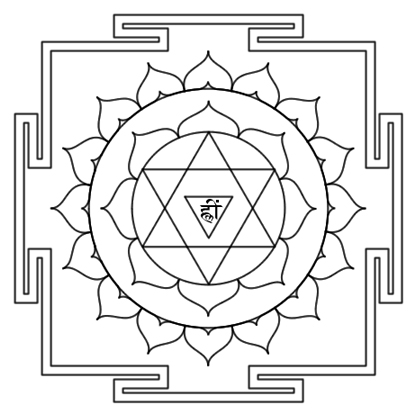
BAGALAMUKHI YANTRA – BAGALAMUKHI MANTRA
“MEDITATION FORM
Bagala is another of the frightening forms of the Goddess. Her color is yellow. She is clad in yellow clothing and is adorned with yellow ornaments and yellow flowers (particularly the champak flower). With her left hand she catches hold of her opponent’s tongue and with her right hand she strikes him on the head with her mace. She sits upon a golden throne surrounded by red lotuses. By some accounts she wears the crescent moon as a jewel on her bead.
Her yellow color (which generally is made wiih turmeric root) shows her bright and cleansing energy. Yellow shows the radiance of knowledge that overcomes all darkness. For her worship one should also dress in yellow. Her opponent is the ego. She pulls out the tongue of the ego, which is the attachment to gossip, opinions, and all negative speech patterns that are the essence of the self-focused mind As long as we are involved in such negative speech patterns we must come to experience the wrath of Bagala
MANTRA
The prime mantra for Bagalamukhi the seed-syllabe Hlriim. The addition of the la-sound to the mantra Hriim gives it the power to stop things. She also has an extended mantra.
Om hlriim bagalaamukhi sarvadushthaanaam vaacam mukham padam stambhaya jihvaam kiilaya buddhim vinaashaya hlriim om svaahaa!” [ see the source here ] Tantric Yoga and the Wisdom Goddesses – David Frawley
BAGALAMUKHI YANTRA
In Brihat Tantrasara [73-79] we find the description of Bagalamukhi Yantra: “A triangle, placed inside a hexagon surrounded by eight leafs and the [four] gates [bhuupura] having in centre The Lady of Lotus hallowed with mantras: Aum Adhara Shakti Kamalasanaya namah (.o aadhaara”saktikamalaasanaaya nama.h) and [aum]Shakti Padmasanaya namah ( “saktipadmaasanaaya nama.h ); in the six angles (of hexagon) are: Subhaga [in E], Bhagasarpini [in Agni or S-E], Bhagavaha [in Ishana or N-E], Bhagasiddha [in V] , Bhaganipatini [in Nirriti or S-V], Bhagamalini [in Vayu or N-V]”
IMPORTANT: remember the Yantra and also mandala distribution of cardinal points using the following scheme:
Subhaga E INDRA Jaya
Akarshini Bhagavaha N-E ISHANA ———————- S-E AGNI Bhagasarpini*** Vijaya
mo.m Mohini N KUBERA————————— S YAMA Ajita
ja.m Jambhini Bhagamalini N-V VAYU———————– S-V NIRRITI Bhaganipatini Aparajita
hlii.m ( sta.m) Stambhini** Bhagasiddha V VARUNA
(we found also those vidya in Bhagamalini mantra* see note bellow}.
“Then, in the circle of eight lotus petals [or the eight leaves] must be invoked the eight [shakti, preceding their name with aum and ending in namah, starting from east]: Jaya, Vijaya, Ajita, Aparajita, Stambhini, Jambhini, Mohini, Akarshini. [we found in other text Jambhani as shakti] At gates must say Aum Bhairavaya Namah [.o bhairavaaya nama.h.]. ”
BAGALAMUKHI KARA-ANGA – NYASA as found in Brihat Tantrasara (67)
“tata.h karaa”nganyaasau:
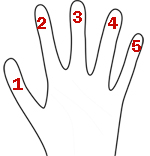 |
1 om hlii.m nama.h and for centre of palm: buddhi.m vinaa”saya hlii.m .o svaahaa pha.t |
.o hlii.m a.mgu.s.thaabhyaa.m(1) nama, bagalaamukhi tarjaniibhyaa.m(2) svaahaa,
sarvadu.s.taanaa.m madhyamaabhyaa.m(3) va.sa.t, vaaca.m mukha.m stambhaya
anaamikaabhyaa.m(4) hu.m, jihvaa.m kiilaya kiilaya kani.s.thaabhyaa.m(5) vau.sa.t,
buddhi.m vinaa”saya hlii.m .o svaahaa karatalap.r.s.thaabhyaa.m pha.t |
eva.m h.rdayaadi.su ”
We see the order for japa and nyasa, and the general five biija mantra used in Nyasa: nama.h, svaahaa and so on. As a matter of fact, we can argue this method to associate segments of mantra with fingers as a learning method for japa at the begining of practice with this long mantra.
Our notes on practice: Focus on yantra. In the sixteen petals use bija mantra HLIM (hlii.m). In the eight petals use biija mantra HRIM (Hrii.m)****. In the centre is Bagalamukhii Biija Mantra HLRIM (hlrii.m). You can also use the Yantra bellow, despite its construction is slightly different from traditional (there are some proportions used). I am sure you have already found Bagalamukhi biija mantra written as hrim or hlim. In brihat tantra saara we found biija mantra hlii.m used in nyasa. hrii.m is Buvaneshvari biija. But the most important is Bagalamukhi biija and it’s form is hlrii.m, used in Shri Vidya puja. The H is read as in english “hit” , lr is read as lr from english “already” then we have a long I, like “ee” in english addressee. The final m is pronounced with closed mouth, so it’s a nasalized sound.
 * Bhagamalini mantra in Brihat TantraSara
ai.m hrii.m “srii.m aa.m ai.m bhagabhage bhagini bhagodari bhagaa”nge
bhagamaale bhagaavahe bhagaguhye bhagayoni bhaganipaatini
sarvabhagava”sa”nkari bhagaruupe nityaklinne bhagasvaruupe sarvabhagaani
me hyaanaya varade rete surete bhagaklinne klinnadrave kledaya draavaya
sarvasattvaan bhage”svari amoghe bhagavicche k.subha k.sobhaya
sarvasattvaan bhage”svari ai.m bluu.m ja.m bhe.m bluu.m mo.m bluu.m he.m
bluu.m klinne sarvaa.ni bhagaani me va”samaanaya strii.m hara blau.m hrii.m
bhagamaaliniinityaakalaayai nama.h
** In Garuda Purana we find the group of three shakti: jambhini stambhini mohaya [ GarP_1,183.12], also in Parasurama-Kalpasutra [Parks_5.6] sammohini , stambhini, jrimbhini as attendands of Sundari in her Yantra. But the group of three shakti is associated with the triangle in Shri Vidya Yantra “try-asre jambhini-mohini-stambhinyah” [ Parks_7.26]. The Biija Mantra given in the same text for stambhinii is sta.m [Parks_10.53] . But the innermost Biija Mantra is hlii.m.
*** In ShrIvidyA kavacham are invoked 3 of those shakti: bhagasarpiNI (belly), bhagamAlA (navel), subhagA (forehead). Bagalamukhi is connected with Shri Vidya starting with mantra, yantra and attendants (shakti).
**** In diiksaaprakaasa we read:
“atha bagalaamukhiimantra.h |
hrii.m hrii.m bagalaamukhi sarvadu.s.taanaa.m vaaca.m mukha.m pada.m
stambhaya jihvaa.m kiilaya buddhi.m vinaa”saya hrii.m .o svaahaa”
By 37ftcsite on June 3, 2019 in mantra yoga
By 37ftcsite on May 27, 2019 in mantra yoga
You can find it on http://muktalib5.org/digital_library_secure_entry.htm in brhattantrasāra :
“oṃ tatsaviturvareṇyaṃ tryambakaṃ yajāmahe sugandhiṃ
puṣṭivarddhaṇaṃ bhargo devasya dhīmahi urvārukamivabandhanāt
dhiyo yo naḥ pracodayāt (mṛtyormukṣīyamāmṛtāt)”
By 37ftcsite on May 27, 2019 in mantra yoga

kākadhvajarathārūḍhā vilambitapayodharā |
śūrpahastātirūkṣākṣā dhūtahastā varānvitā ||
kākadhvaja = crow + Adorned with flags, having a mark
rathā = chariot
rūḍhā = mounted, seated on
vilambita = hanging, pendulous
payodharā = breast
śūrpī = winnowing-basket
hasta = hand
rūkṣākṣā = cruel eyeas
dhūta = trembling
varānvitā = the gesture of offering boons, gresture of wish -filling
“She sits on a cart which has a crow in the banner. Her breasts hang down. In the hand she holds a winnowing fan and her eyes look very cruel. She has unsteady hands and her hand shows the gesture of wish-fulfilling”.
c.f. “Transformations and Transfer of Tantra in Asia and Beyond” Ed. István Keul p.173 (v. https://play.google.com/store/books/details?id=38gxbEft3-4C&rdid=book-38gxbEft3-4C)
By 37ftcsite on May 22, 2019 in mantra yoga
sanskrit: बीजम् – translation: बीजम् [bījam], 1 Seed (fig. also), seedcorn, grain; अरण्य- बीजाञ्जलिदानलालिताः Ku.5.15; बीजाञ्जलिः पतति कीटमुखावलीढः Mk.1.9; R.19.57; Ms.9.33. A germ, element. Origin, source, cause; बीजप्रकृतिः Ś.1.1 (v. l.). Semen virile; यदमोघमपामन्तरुप्तं बीजमज त्वया Ku.2.5,6. The seed or germ of the plot of a play, story &c.; see S. D.318. Marrow. Algebra. The mystical letter forming the essential part of theMantra of a deity. Truth, divine truth. A receptacle, place of deposit. Calculation of primary germs. Analysis. The position of the arms of a child at birth. -जः The citron tree. (बीजाकृ means To sow with seed; व्योमनि बीजाकुरुते Bv.1.98. To plough over after sowing). -Comp. -अक्षरम् the first syllable of a Mantra. -अङ्कुरः a seed-shoot, first shoot; अपेक्षते प्रत्ययमुत्तमं त्वां बीजाङ्कुरः प्रागुदयादिवाम्भः Ku.3.18; Pt.1.223. (-रौ) seed and sprout. ˚न्यायः the maxim of seed and sprout; see under न्याय. -अङ्घ्रिकः a camel. -अध्यक्षः an epithet of Śiva. -उपहारिणी a witch. -अम्लम् the fruit of Spondias Magnifera (Mar. कोकंबी). -अर्थ a. desirous of procreation. -अश्वः a stallion. -आढ्यः, -पूरः, -पूरकः the citron tree. (-रम्, -रकम् the fruit of citron. -उत्कृष्टम् good seed; अबीज- विक्रयी चैव बीजोत्कृष्टं तथैव च Ms.9.291. -उदकम् hail.-उप्तिः f. sowing seed. ˚चक्रम् a kind of astrological diagram for indicating good or bad luck following on the sowing of seed. -कर्तृ m. an epithet of Śiva. -कृत् a. producing semen. (-n.) an aphrodisiac.
By 37ftcsite on May 21, 2019 in mantra yoga
śāktapramodaḥ
Dhūmāvatī dhyānam
(line 11131 ): vivarṇā cañcalā duṣṭā dīrgghā ca malināmbarā |
(line 11132 ): vimuktakuntalā rūkṣā vidhavā viraladvijā ||
vivarṇā = colourless, pale
cañcalā = trembling
duṣṭā = tainted, very dissolute
dīrgghā = tall
ca malināmbarā = blackness, impurity Cloth, garment, clothing, apparel, dress
vimukta kuntalā = losed hair of the head
rūkṣā = dry
vidhava = widow
aviraladvijā = trembling continuous
“She is pale and fickle, angry, of high stature and wears dirty clothes. Her hair is dishevelled. The widow is rough and has intermittent teeth.”
c.f. “Transformations and Transfer of Tantra in Asia and Beyond” Ed. István Keul p.173 (v. https://play.google.com/store/books/details?id=38gxbEft3-4C&rdid=book-38gxbEft3-4C)